The base knows its exact position
Because the base never moves, it can compare the satellite position with its accurately calibrated real position.
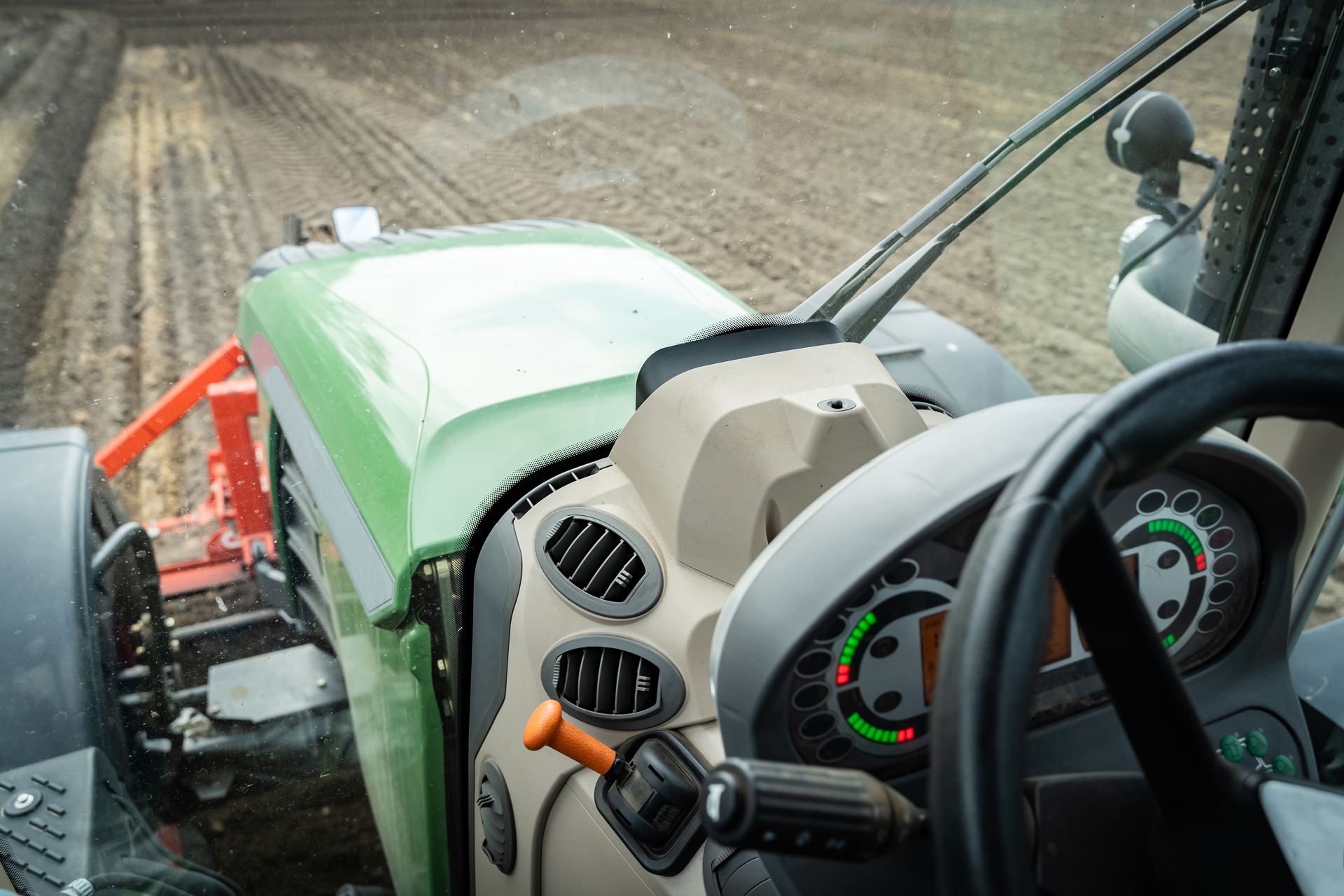
Satellites give the tractor a position. A fixed base measures the small errors in that position and sends corrections over the internet. The tractor applies them and drives accurately and repeatably.
The tractor still uses satellites. RTK simply gives it the extra information needed to remove most of the normal GNSS error.
Because the base never moves, it can compare the satellite position with its accurately calibrated real position.
The base sends a small RTCM correction stream to our server, and NTRIP delivers it to the tractor through mobile data.
The receiver combines the corrections with its satellite signals and reaches RTK FIX for centimetre-level, repeatable guidance.
We check these before supply so you are not left paying for a service the machine cannot use.
The tractor must have a suitable GNSS receiver and the correct manufacturer RTK unlock.
The display, receiver or modem must be able to connect to an internet correction service.
The tractor needs a reliable internet connection while it is working.
The login, correction format, antenna offsets and steering calibration all need to be right.
Both send corrections to the tractor through NTRIP. The difference is where the correction comes from and how the service is priced.
A local base is installed on your farm and joins the wider RTK Solutions network. One farm service can supply multiple compatible machines.
The tractor receives corrections from an existing partner reference-station network, so no base is installed on the farm.
Send us the tractor, display and receiver model. We will check the unlocks, NTRIP support and which option makes the most sense.
Accuracy and RTK FIX availability depend on compatible equipment, correct setup, satellite visibility, correction latency, mobile data, antenna condition and local working conditions.